
In the dynamic environment of modern logistics, efficiency, transparency, and operational control are paramount. The Warehouse Management System (WMS) stands as the essential tool for businesses seeking stability and competitive advantage amidst digital transformation. LogNRG, drawing on decades of experience in logistics automation, treats the WMS not merely as software, but as a critical execution system that directs and controls the core activities of the warehouse floor.

Understanding Warehouse Management Systems
What is a Warehouse Management System?
A WMS is comprehensive software designed for the effective management and automation of all operations within a warehouse. It ensures complete control over inventory, the movement of goods, order processing, and shipment execution.
LogNRG specialists emphasize that the WMS functions as a logistic execution system. Unlike Enterprise Resource Planning (ERP) systems, which focus on financial accounting and high-level planning, the WMS is dedicated to operational planning and controlling the execution of technological processes, ensuring personnel follow the correct sequence of actions from start to finish.
How WMS Solutions Enhance Warehouse Operations
The strategic value of WMS lies in replacing manual decision-making with quantifiable algorithms, thereby minimizing the human factor and reducing operational risk. Automation provides reliable, truthful reporting necessary for critical business decisions, enables resource and equipment management, and substantially increases warehouse productivity.
Companies that fail to automate often incur monthly losses that can reach 30-40% compared to automated processes. WMS solutions mitigate this risk and enable progressive scalability.
Types of WMS Solutions: A Comprehensive Overview
The market offers different WMS types, tailored to varying business complexity:
- Boxed (Standard) Systems: These products are fully ready for implementation, relying on a fixed set of functions and limited configuration options. They are best suited for small organizations managing simple, standard business processes. A critical drawback is the difficulty in assessing their use for future scaling, which often necessitates replacing the system entirely when the business outgrows the fixed functionality.
- Adaptable WMS (e.g., LEAD WMS): These solutions are highly demanded globally. They are built upon a core module that automates main processes but offer extensive flexibility. LEAD WMS allows users to define custom rule sets and add specialized modules without altering the underlying code. This adaptability is crucial for medium and large enterprises whose business processes are complex, unique, or subject to frequent changes.
Key Processes in Warehouse Management
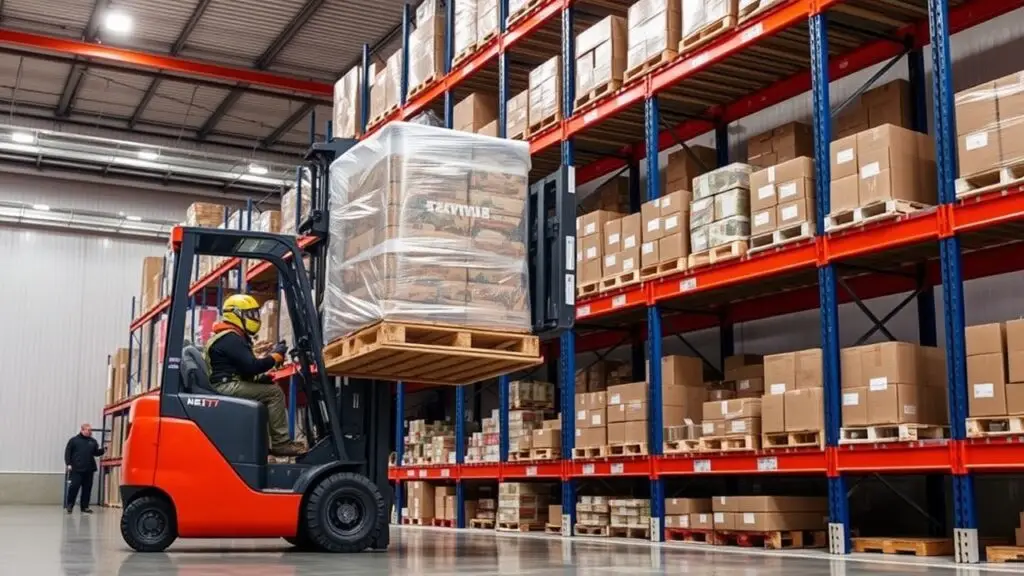
The modern WMS controls the entire flow of goods, managing both high-level planning aspects (like wave formation) and low-level physical execution (like individual movements of goods).
Inventory Management within a WMS
Accurate, real-time inventory management is the heart of WMS functionality.
- Address Space Management: The WMS relies on working with addressed space, where every cell has defined properties (e.g., temperature regime, storage type) that the system uses to determine its suitability for specific operations.
- Automatic Identification: The system uses technologies like barcodes or RFID tags to identify and record goods parameters, including name, packaging, expiration date, and lot number.
- Rule Logic Application: WMS manages storage and retrieval by adhering to strict rules, such as FIFO (First-In, First-Out) for products with limited shelf life, as well as rules regarding product compatibility (co-storage) and velocity metrics (ABC/XYZ analysis).
The Flow of Goods in an Efficient Warehouse
WMS automates numerous end-to-end technological business processes (TBP).
| Process Step | WMS Functionality |
| Inbound & Yard Management | Registration of vehicles, management of yard queues, and control over loading/unloading operations. |
| Receipt & Placement | Control of receiving goods, checking quantity and quality, and sorting products according to specific rules (e.g., mandatory labeling systems). WMS then calculates the optimal placement location based on available space, product attributes, and velocity metrics. |
| Storage & Optimization | Management of storage, replenishment (moving stock to picking locations), and compaction (optimizing storage density). Specialized WMS, such as those used for food production, also monitor cold chain compliance and chamber energy consumption. |
| Order Picking & Consolidation | WMS issues precise, step-by-step tasks to personnel using mobile terminals (TSDs). It directs the operator to a specific location to pick a specific quantity. Advanced functions include wave planning and parallel operation management to eliminate empty runs. |
| Outbound & Shipping | Control over quality checks, packing (e.g., into designated containers or specific cartons), consolidation of collected parts into shipments, and managing transport loading sequences. |
Implementing a Warehouse Management System
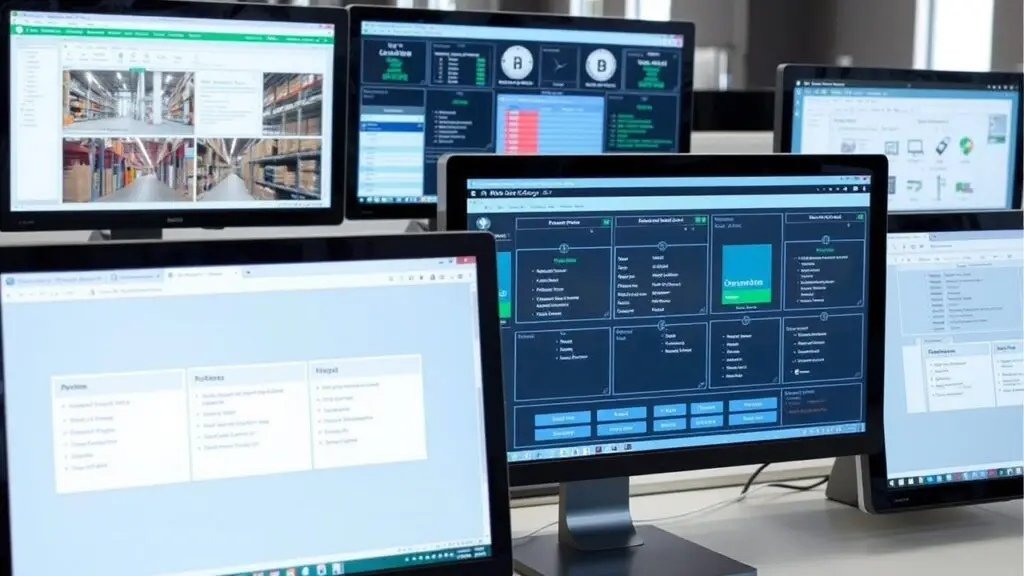
A WMS is only a tool; its effectiveness depends entirely on its correct application within the company’s defined technological processes.
Choosing the Right WMS for Your Needs
Selecting a WMS based solely on cost or popular brand is a critical error. The decision must be rooted in a clear understanding of the desired TBP (Technological Business Processes) and cargo handling technology.
LogNRG identifies key selection criteria:
- Functional Coverage and Adaptability: The system must meet current needs and possess the flexibility to adapt to future changes or unique requirements.
- Scalability and Performance: For large companies with distributed networks, the ability to replicate the system quickly to different sites and maintain high performance under peak loads is vital.
- Methodology: The actual product is the information system plus the proven methodology for its implementation and support. Companies should seek a vendor that offers the automation service (“Hole Buyer” approach), minimizing reliance on internal staff for complex technical execution.
Steps for Successful WMS Implementation
The LogNRG systemic approach starts with process formalization, not software installation.
- Audit and Formalization of “As Is” (Current Processes): The starting point is rigorously documenting existing processes and analyzing current and projected cargo flows. Critically, 95% of businesses lack formalized TBP.
- Designing “To Be” (Target Processes): Experts then develop the desired future TBP, ensuring they align with projected cargo flows. This design must be independent of the WMS features; software selection and configuration only follow process design.
- Functional Requirements: Functional requirements are determined by identifying specific decision points where the WMS will replace human judgment.
- Integration and Rollout: The WMS must integrate deeply with existing Corporate Information Systems (KIS), such as ERP (SAP, 1C). The integration specifies interaction points where data is exchanged based on specific events.
Cloud-Based Warehouse Management Systems: Pros and Cons
Centralized architecture, often used in cloud deployments, is a hallmark of modern WMS, especially for managing expansive, multi-site operations.
- Pros: Centralized WMS allows warehouses to be managed remotely from a single server, reducing complexity and costs. This facilitates rapid scalability and replication to new facilities without interrupting business.
- Case Example: LogNRG successfully deployed LEAD WMS across a large network of sites (e.g., 14 sites over 12 months) managed centrally, resulting in significant reductions in server costs and ensuring high reliability.
Optimizing Warehouse Operations

Automation is not a one-time fix; it is an ongoing process of optimizing execution and adapting management practices.
Efficient Warehouse Operations through Automation
By moving beyond minimal WMS use (which affects only 15% of functionality for over 80% of users), companies unlock substantial efficiency gains:
- Productivity Improvement: Automation drives significant performance increases, such as staff productivity rising by 19%, or the elimination of overtime by 72%.
- Resource Optimization: WMS actively manages personnel and equipment (PHE), eliminating empty runs and ensuring the maximal coefficient of utilization for equipment.
- Quality and Reliability: By enforcing step-by-step technological processes (e.g., specific picking sequences, mandatory controls), WMS drastically reduces errors, translating directly into better service quality (up to 99.9% reliability demonstrated in projects).
Management Processes that Drive Efficiency
Optimization efforts must be supported by strong management culture, shifting from situational problem-solving to systematic development.
- Systemic Audits: Regular technological audits assess whether current processes still match the cargo flows and business goals. Audits help pinpoint inefficiencies—often resulting from non-formalized processes.
- Change Management (PDCA Cycle): The most effective management approach is implementing the PDCA cycle (Plan-Do-Check-Act). This methodology treats processes as evolving documents; changes are first formalized in the TBP, then incorporated into the WMS, implemented on the floor, and finally analyzed. This process ensures independence from individual employee expertise.
Continuous Improvement in Warehouse Management
Continuous improvement is mandatory for competitive advantage. Every proposed change or function must be evaluated against clear criteria:
- Eliminate paper documentation.
- Increase labor productivity.
- Improve quality of work (reducing errors).
- Increase system reliability (reducing dependence on human expertise).
Crucially, companies must avoid the trap of “automation for automation’s sake” (adding features that yield no measurable improvement). The objective is to refine the WMS into an effective execution mechanism that faithfully reflects the technologically sound business processes developed by the logistics experts.
FAQ
What is a WMS system and how does it function?
A WMS system, or Warehouse Management System, is software designed to support and optimize warehouse operations. It manages the flow of goods and inventory, helping warehouse managers oversee day-to-day activities efficiently. By integrating with other supply chain management tools, a good WMS enhances overall warehouse performance and ensures accurate order fulfillment.
How can implementing a WMS improve warehouse efficiency?
Implementing a WMS can significantly improve warehouse efficiency by automating various processes such as inventory management, order management, and labor management. This allows for better tracking of warehouse inventory and streamlining the fulfillment process, ultimately leading to reduced operational costs and increased productivity.
What are the benefits of using cloud-based warehouse management software?
Cloud-based warehouse management software offers several advantages, including scalability, accessibility, and reduced IT overhead. Users can access the system from anywhere with an internet connection, which facilitates real-time updates and enhances collaboration among warehouse workers. Additionally, cloud solutions often provide regular updates and security features without the need for extensive hardware investments.
What should I consider when choosing the right warehouse management system?
When choosing the right warehouse management system, consider factors such as the specific needs of your operations, the scalability of the solution, integration capabilities with existing supply chain operations, and user-friendliness. It’s also essential to evaluate the support offered by the WMS provider and the total cost of ownership, including any potential hidden fees.
How does a WMS help optimize warehouse space?
A WMS helps optimize warehouse space by providing detailed insights into inventory levels and flow of goods. By analyzing warehouse performance data, it allows for strategic placement of inventory and efficient use of storage areas. This not only maximizes available space but also reduces the time required for picking and packing operations.
What types of WMS solutions are available for warehouses?
There are various types of WMS solutions available, including standalone WMS, integrated WMS that works with other management systems, and cloud-based WMS. Each type caters to different warehouse management processes and may offer unique features suited to specific operational needs, such as returns management and transportation management.
How can warehouse management software assist in the order fulfillment process?
Warehouse management software assists in the order fulfillment process by automating tasks such as order picking, packing, and shipping. It ensures that the right products are selected and dispatched on time, which enhances customer satisfaction. The software can also provide real-time tracking information, helping to manage customer expectations effectively.
What role does labor management play in warehouse operations?
Labor management is crucial in warehouse operations as it involves optimizing workforce productivity, scheduling, and task allocation. A WMS can provide insights into labor performance and identify areas for improvement, allowing warehouse managers to make informed decisions about staffing and training to enhance overall efficiency.