You’ve probably seen it before. Maybe you’ve lived it. A warehouse drowning in paperwork, where finding a single item feels like a treasure hunt with no map. Or maybe it’s a facility where performance is a mystery, customer service levels are dropping, and the team is constantly putting out fires instead of planning for development. Here at LogNRG, we’ve seen these challenges for over two decades across more than 500 projects. We know that behind these symptoms often lies a fundamental problem: a lack of control over warehouse processes.
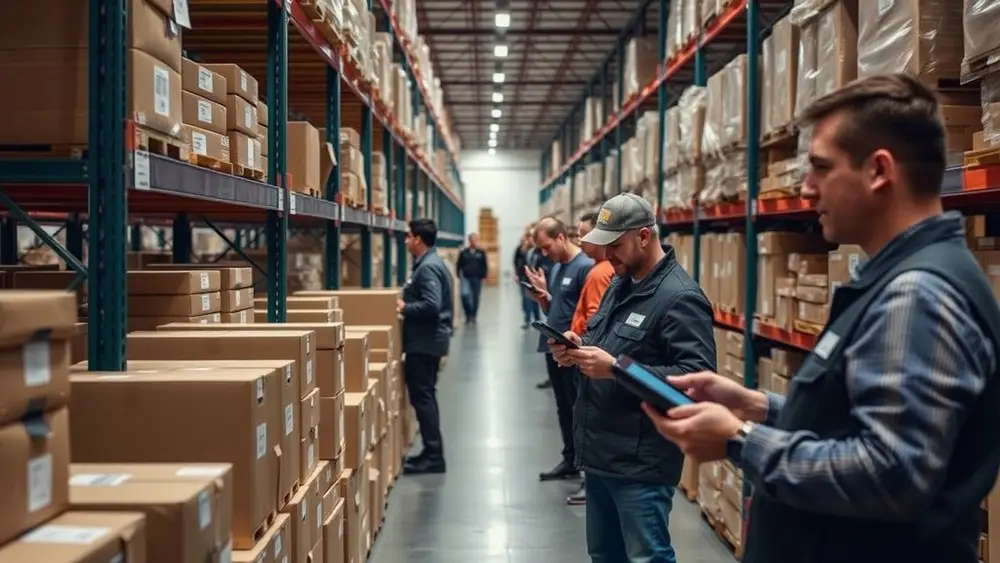
This is where a Warehouse Management System (WMS) comes in. But simply buying software isn’t a magic bullet. It’s about implementing a tool correctly, based on a deep understanding of your unique operations. This article will walk you through the journey of warehouse optimization, from understanding what a WMS is to implementing it successfully and seeing real-world results.
A WMS is much more than just inventory tracking software. It is a comprehensive software suite designed to manage and automate every operation inside your warehouse. Think of it as the brain of your logistics operation, providing complete control over inventory, goods movement, order management, and shipping. It directs your staff, telling them what to pick, where to put it, and the best route to take, minimizing human error and maximizing efficiency.
A WMS works by creating a digital map of your warehouse, assigning a unique address to every storage location, from a massive pallet rack to a small bin. Every item, pallet, and piece of equipment is identified, usually with a barcode or RFID tag. This allows the system to track everything in real-time, providing an accurate, live picture of your entire operation.
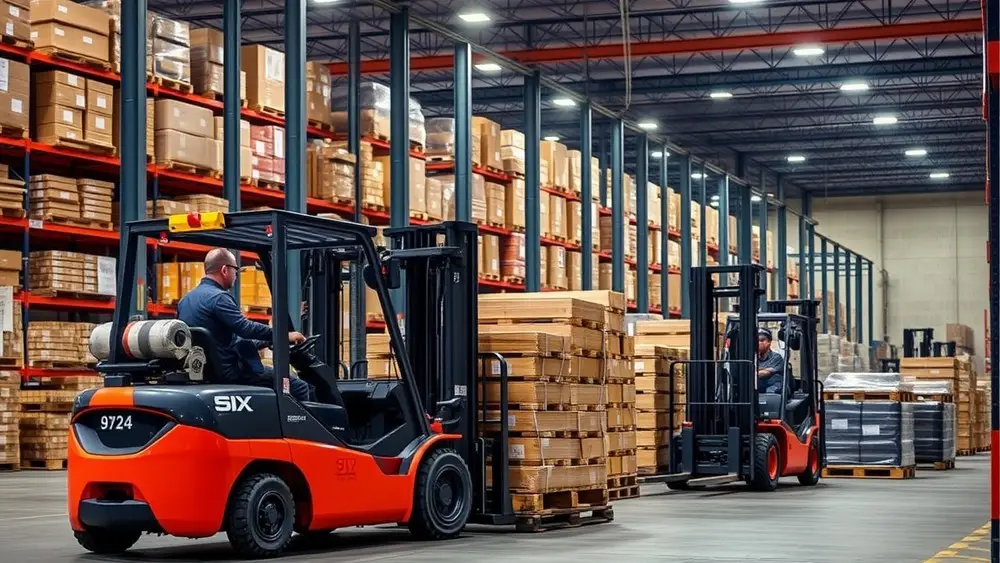
In today’s fast-paced supply chains, a warehouse can either be a strategic asset or a major bottleneck. Without a WMS, businesses often suffer from:
A WMS is a foundational element of digitalization, which is the process of converting information from an analog (expert knowledge) format to a digital one. By implementing a WMS, you’re not just automating tasks; you’re digitizing the decision-making algorithms that drive your warehouse. This move is a crucial step toward digital transformation—a complete shift in your business model that reduces reliance on human functions and enables management based on objective data.

A modern WMS delivers efficiency through a set of powerful, interconnected features that bring order to warehouse chaos. These capabilities work together to control the flow of goods and information.
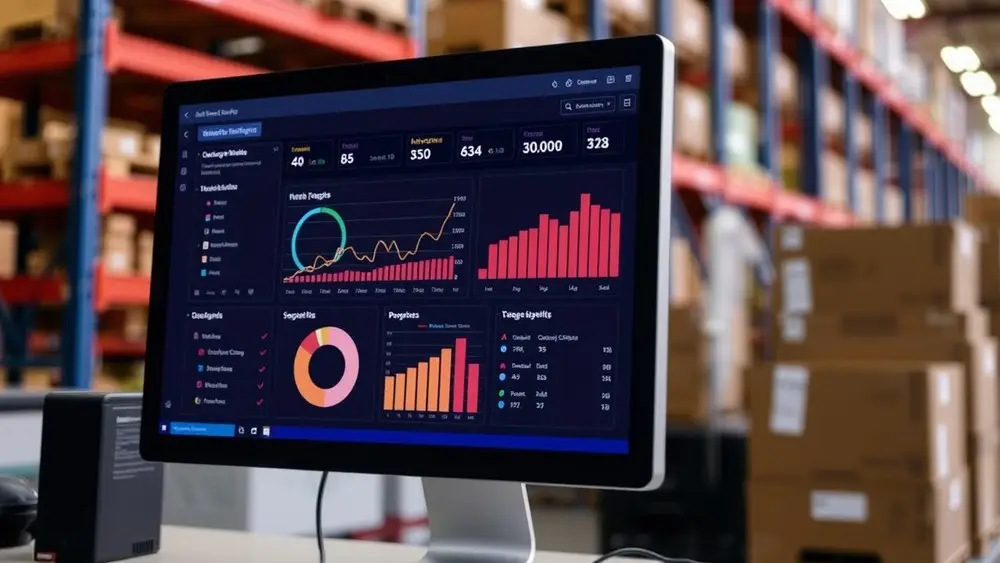
Real-Time Inventory and Process Control: Through the use of barcode scanners and radio terminals, the WMS tracks every movement and action in real time. This provides managers with an accurate, up-to-the-minute view of inventory levels and operational performance, enabling data-driven decisions.

The path a warehouse takes in its evolution—from entirely manual operations to full-scale robotics—directly influences the type of WMS required. Understanding this journey helps clarify what kind of system your facility needs today and what it might need tomorrow.
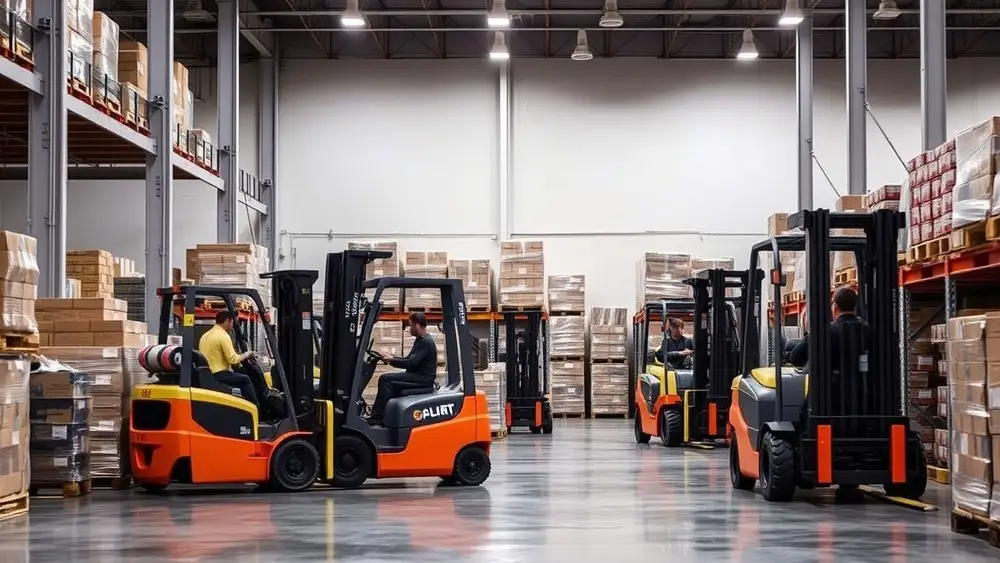
A business often starts with a manual warehouse, where 100% of operations rely on human labor. As the business grows, it faces a choice. If the product range expands, it might transition to a manually operated but automated warehouse, where a WMS helps manage a large number of SKUs on shelves. If the volume of stock for each item increases, it becomes a mechanized warehouse, requiring forklifts and pallet racks to handle larger quantities.
The real transformation happens when the intensity of operations ramps up. At this point, the warehouse evolves toward automation and robotics. A WMS is the critical enabler for this leap, managing everything from simple conveyors to complex robotic systems.
Years ago, the market was dominated by a choice between “boxed” systems with fixed logic and fully custom-built software. Boxed solutions were often too rigid for businesses with unique processes. Custom systems, while tailored, could be difficult and expensive to maintain and scale.
Today, the paradigm has shifted. Modern WMS solutions are adaptable and configurable. They are built on a core module that automates standard warehouse processes, with the ability to add specialized modules or define custom rules without extensive programming. This flexibility is essential because, in our experience, over 85% of projects require some level of customization to meet a business’s unique needs. A modern WMS grows with your business, allowing you to scale operations and adapt to new challenges without being locked into a rigid system.
A WMS isn’t just about managing what you have; it’s about making every process better. You can’t just automate chaos and expect good results. A successful implementation starts with a thorough audit of your current processes to identify bottlenecks and opportunities for improvement.
A WMS offers powerful strategies to streamline operations. Here are a few core examples our team at LogNRG implements:
A common point of confusion is the difference between a WMS and an Enterprise Resource Planning (ERP) system. An ERP operates at the planning level, managing functions like accounting, procurement, and order entry. A WMS, on the other hand, is an execution system that manages the real-time, physical operations on the warehouse floor.
Seamless integration between the two is critical. The ERP sends orders to the WMS, and the WMS sends back real-time updates on inventory levels, order status, and shipment confirmations. This integration should be based on clearly defined technological processes, outlining which system is the source and consumer of data for each step. Integration can be achieved through direct system calls or, more robustly, through an intermediary platform (middleware) that logs all interactions and prevents system overloads.
Successful WMS implementation is a structured project, not a shot in the dark. Statistics show that 75% of companies seek automation too late, when they’re already facing massive losses from inefficiency. A proactive, well-planned approach is the key to avoiding this trap.
Based on our two decades of experience, our team at LogNRG follows a proven methodology:
Many implementations fail due to predictable and avoidable mistakes. The biggest challenges often stem from poor planning and a lack of a systemic approach. Common pitfalls include launching during peak season, not having a detailed project plan, failing to secure buy-in from staff, and not defining a clear leader for the project. Issues also arise when processes are not formalized before implementation, leading to the automation of existing inefficiencies.
To ensure success, it’s vital to treat the implementation as a business transformation project, not just an IT installation. Involve key users from day one, as they are the drivers of change and future trainers. Formalize your processes before touching any software to ensure you are automating optimized workflows. Always have a “Plan B” in case of unexpected issues during go-live to prevent costly warehouse downtime. Finally, a strong, dedicated project leader on the client’s side is crucial for keeping the project on track.
At LogNRG, we believe a WMS is more than software—it’s a partnership to build a more efficient, scalable, and resilient logistics operation. Our approach is built on a foundation of deep expertise, a systemic methodology, and cutting-edge technology.
Our core offering is an adaptable WMS platform designed to grow with your business. It combines a powerful base module with the flexibility to add specialized functions or define custom rules without reprogramming. One of our key differentiators is the use of a Digital Twin, a highly accurate 3D simulation of your warehouse. We can load it with your actual order data and run virtual “bots” that simulate employee and equipment actions, all connected to a real, configured WMS.
The primary benefit of our approach is risk reduction and validated optimization. The Digital Twin allows us to:
Our methodology delivers measurable results across various industries. Here are a few anonymized examples from our portfolio:
These cases demonstrate that a WMS is a powerful tool for transformation. By adopting a strategic, process-driven approach and leveraging modern technologies like digital twins, companies can turn their warehouses into a true competitive advantage.